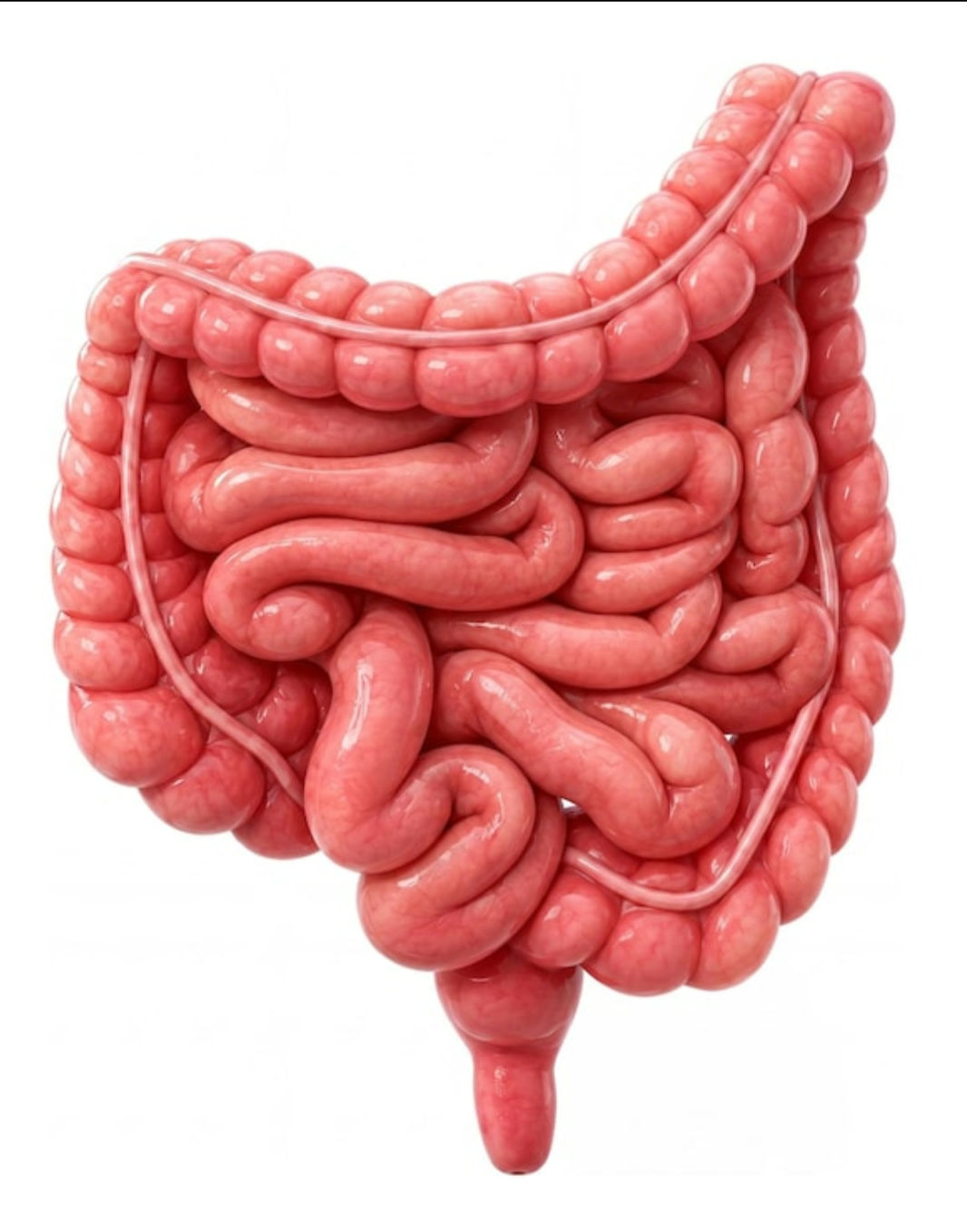
Not All Constipation Are Actual "Constipation" : Understanding Dyssynergic Defecation

Do you struggle to pass stool even when it is soft?
Do you spend a long time on the toilet but still feel that your bowel has not emptied completely?
The problem may not be ordinary constipation. It could be a condition called dyssynergic defecation, in which the muscles responsible for passing stool do not work in coordination.
How common is it?
Chronic constipation affects approximately 11–18% of the general population in many studies. Dyssynergic defecation may be present in around one-third of patients with chronic constipation.
Despite being relatively common, this condition often goes unrecognised.
What is dyssynergic defecation?
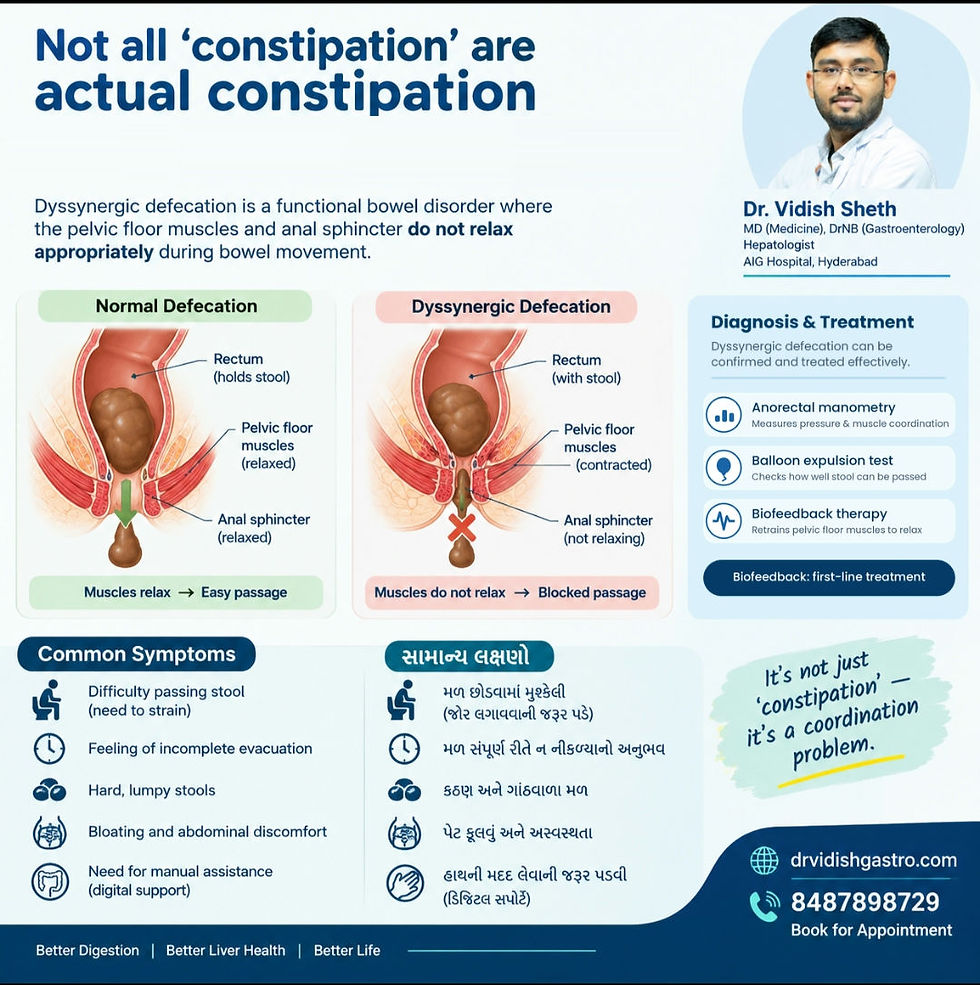
Normally, when you pass stool, the abdominal muscles push while the pelvic floor muscles and anal sphincter relax to allow stool to pass.
In dyssynergic defecation, these muscles fail to coordinate properly. The anal sphincter may not relax adequately or may contract when it should relax.
Imagine trying to open a door while someone is pushing it from the opposite side. You may exert considerable effort, but the door still does not open.
What are the symptoms?
Common symptoms include:
Excessive straining during bowel movements.
Feeling that stool is stuck near the anus.
Incomplete evacuation despite passing stool.
Spending a long time on the toilet.
Repeated urges to pass stool.
Persistent bloating or abdominal discomfort.
An important point: You can have a bowel movement every day and still have a defecation disorder.
Why don't laxatives always work?
Laxatives help soften stool or stimulate bowel movements. However, if the muscles responsible for evacuation are not working properly, even soft stool can be difficult to pass.
This is why patients with persistent constipation despite appropriate treatment may need further evaluation.
How is it diagnosed and treated?
Your gastroenterologist may recommend:
Anorectal manometry: Evaluates anal and rectal pressures and muscle coordination.
Balloon expulsion test: Assesses the ability to expel a small balloon from the rectum.
Defecography: Used in selected cases to assess evacuation and pelvic floor function.
What is the treatment?
Biofeedback therapy is a first-line treatment for confirmed dyssynergic defecation. It trains patients to coordinate abdominal pushing with relaxation of the pelvic floor muscles. Clinical trials have demonstrated significant improvement in many appropriately selected patients.
Dietary adjustments, adequate fluid intake, physical activity and constipation medicines may also help, depending on the individual's symptoms.
The takeaway
Not all constipation is caused by hard stools or slow bowel movements. Sometimes, the problem lies in how your body coordinates the process of defecation.
If you experience persistent straining, incomplete evacuation or constipation despite appropriate treatment, consult a gastroenterologist to identify the underlying cause.
Dr. Vidish Sheth
Gastroenterologist & Hepatologist
References: Rao SSC et al. Diagnosis and Treatment of Dyssynergic Defecation. Clinical reviews on dyssynergic defecation and biofeedback therapy.
This article is for educational purposes and does not replace individual medical advice.
Comments